Tuesday, April 28, 2020

Review: Astral Projection and How to Accomplish It

Astral Projection and How to Accomplish It

by Dr. M. Doreal

Today I'm reviewing Astral Projection and How to Accomplish It by Dr. M. Doreal.

I bought this tiny and obscure book many years ago; probably back in 1980. I probably paid less than 5 dollars. Today you can buy it online for 10 dollars, but it's not worth it. It was published by an organization I know nothing about: the "Brotherhood of the White Temple" in Sedalia, Colorado. Oooh, sounds like mysterious and forbidden secret occult knowledge. What's not to like, right?

Unfortunately, the book doesn't live up to expectations.

Some of the beliefs he teaches seem reasonable. For example, he says that it's not that we're in our physical body, astral body, or any other body. We're in all those bodies already, and it's just a matter of which one we're focused on. I kind of liked that.

Other claims are much more dubious. For example:
"You have four aspects of soul: (1) Spiritual - Chiah. (2) Soul of the Divine Mind - Neschemah. (3) The Astral Soul - Ruach, and (4) Material Soul - Neplesch." (pg. 17)
And then there are the claims that sound like complete nonsense to me. For example:
"The second dimension is considered to interpenetrate all dimensions except the sixth which is the boundary of this cosmos. The Second Dimension is considered as the actual pathway or highway--the road that we travel to arrive at the Fourth Dimension, and we travel further to arrive at higher planes." (pg. 15)
Sounds like complete gobbledygook to me.

I found this interesting:
"I might mention here never to attempt conscious projection immediately after eating a heavy meal or while lying flat on the stomach: these are the only two 'don'ts.'" (pg. 18)
Doreal only gives one astral projection technique, and it's actually quite interesting. It reminds me of some of the motion-based techniques I've used.
"Allow the consciousness to sweep slowly up the body. Do this for two or three minutes. As you come up, be conscious of the body below, and will for it to go to sleep - first the toes and then up until you draw your consciousness into the head where it centers automatically above and between the eyes on the pituitary gland. Then move it towards the back of the head. Move it backwards and forwards two or three times, like a shuttle, back and forth as in a sewing machine. You will discover that one side seems a little weaker than the other. Do not push with a lot of force - just let it drift back. If you feel pressure holding it back, just press a few more times, until you have a rhythmic swing back and forth. Then let it rest at the back of the head on the third eye. Then visualize a light of any color you wish, spinning around and around. Then will for that light to expand and contract. Repeat the expansion and contraction further each time until you finally feel as if your head is full of light and pulsing with that expansion and contraction. When you get that right, turn loose of it and you will find it will go on contracting and expanding without you're concentrating on it..." (pg. 19)
Later he goes on to say:
"Center the consciousness on the pineal - visualize a light - swing it back and forth like the pendulum of a clock and get into rhythm. Find the side which seems to give the most and swing a little farther each time, then swing it down and through a curve. It is that movement of consciousness which swings you into the Fourth Dimension." (pg. 20)
What struck me is how similar that is to my technique of developing a gravity between your consciousness and a swaying hypnagogic image. (As described in this blog article and elsewhere). Doreal is using a light rather than a hypnagogic image, but there are a lot of similarities.

The book is only 22 pages long, with small footprint and my copy has a large fixed-width font.

I'll give it 1 1/2 stars out of 5, mostly because it's too short and has some misinformation. It's not the worst book I've read on astral projection, but it falls way short of other books.

Bob Peterson
28 April 2020
---------------------------

If you want me to review a book about out-of-body experiences or astral projection, send me an email: bob@robertpeterson.org, but please check the index first to see if I've already reviewed it. Also, I've got a huge pile of books I'm planning to review, so don't expect a quick turnaround.

If you like my work, visit my website, robertpeterson.org, where you'll find lots of other free OBE advice and links.

Return to the index of my OBE Book reviews

Tuesday, April 14, 2020

Covid-19's Lessons

Covid-19's Lessons


by Bob Peterson


The Covid-19 pandemic is affecting everyone: the world is rife with anxiety, fear, and uncertainty. I see this not as a tragedy, but as a huge set of spiritual life-lessons being forced upon humankind.

The fear and hysteria of the virus has spread faster than the virus itself, thanks to the mass media and their campaign of terror. (I sometimes think the mass media should be labelled terrorists, since they use the same tactic--fear--to control people and promote their agenda.) But fear is never productive in life or in OBEs.

I've always been an optimist and tried to see the bright side of things, no matter how bad. Why? Because optimism pays. As a life-long reader of Jane Roberts I've always believed that, as "Seth" so aptly put it, "You create your own reality." If you wear "negativity sunglasses," your reality will be negative. If you wear "fear sunglasses," your experience will be terrifying. But if you're optimistic and expect positive outcomes, your reality will be positive. [Many modern new-agers believe in "The Secret" and the "Law of Attraction" but before all that was Jane Roberts and "Seth." One of my favorite books is The Nature of Personal Reality. Do check it out if you can.]

That doesn't mean bad things won't happen. When bad things happen, it's usually a life-lesson: something we agreed to do at a "higher self level" to learn (or teach) important spiritual lessons, fulfill sacred contracts, karma, or otherwise meant to be. Sometimes we need that because we stubbornly refuse to learn until we're forced out of our comfort zone, and that sometimes involves negative emotions like loneliness, grief, fear, pain, and despair.

So one of the best things you can do to weather this pandemic is change your attitude to positive and optimistic. One of the ways you can do that is to look not for the negative outcomes, but for the lessons being taught. And if we learn the lessons we're supposed to, we don't need to learn them the painful way. At least that's my philosophy.

Why is this happening now?

Let's face it: The system was broken. Humans were raping the land and polluting everything: land, sea, and air, at the expense of nature and Earth's creatures. Globalization--global buying, selling and trading--fueled more greed and lust for political power. There was a rampant attitude of entitlement and self-centeredness, with little-to-no appreciation for people who made it all possible. We needed an attitude adjustment.

Freedom and abundance

We took our freedom an abundance for granted. But as glam-metal band Cinderella once sang, sometimes you "Don't know what you've got 'til it's gone." We need to relearn the value of freedom and abundance by its temporary absence.

Environmental effects

Sadly, Covid-19 has done more to help the environment than Greta Thunberg, Greenpeace, and all the climate summits ever held. The Earth is healing itself. People are polluting less, using less gasoline, having a less negative impact on the environment. This is a lesson in how to work in cooperation with nature, and not to rape the Earth.

I recently watched a show about recent attempts to clone live mammoths using ancient DNA (An episode of "Destination Unknown" with Josh Gates). While many scientists are sounding the alarm about losing arctic permafrost to "climate change," groups of people are illegally using power washers to purposely thaw the permafrost as fast as they can to uncover valuable mammoth remains in Siberia. These are not scientists who want to study mammoths. These are just greedy people destroying our world for a few rubles. It's very disturbing, and it needs to stop. But like elephant tusk poaching, rhino horn poaching, drug trafficking, and sex trafficking, it's a problem of supply and demand. The only way to stop it is to cut off the demand.

Crime is at an all-time low

Everyone is staying at home, so burglars have no targets. There are no masses, so no mass-shooters. Many businesses are closed, so armed robberies have almost stopped. Curfews keep people indoors and at home, so there are less opportunities for rapes and murders. Even the gangs in Chicago are laying low. Criminals are learning to live without crime.

Self-sufficiency

In the wake of panic over-buying, people are learning to become more self-sufficient. Many people are planting gardens to grow their own vegetables, raising chickens, and making due with less. We're learning to reduce, reuse and recycle like never before.

Preparing for the future

People who used to live hand-to-mouth are suddenly learning the value of saving money, and stocking up for hard times. For many it may be too late, but not for everyone. The lesson is in seeing beyond our noses and living for the future, not just for today.

Valuing essential services

Suddenly rich celebrity jocks, sports heroes and sports teams have no real relevance. People are starting to learn the high value of doctors, nurses, healthcare workers, truckers, tradespeople, and stock grocery store workers: people who keep the infrastructure running. I only hope we learn to value teachers as much.

Socialism

I've always had a love-hate relationship with my friend (and ex-publisher) Frank DeMarco: I'm a staunch Libertarian and he's an all-in Bernie Sanders-style "democratic socialist." I've always insisted that socialism will never work in today's world because people are too selfish and motivated by greed. Most people are motivated by their own self interests: they will work for themselves and not the common good. Forcing them to do so will never be successful.

It goes back to that same supply and demand. I see Covid-19 as a spiritual big lesson in selfishness versus selflessness. We've got to learn the difference between needs and wants. We've got to learn to live for each other, not for just ourselves. This is an important step humankind has to learn before socialism will work.


But those lessons are also forced upon us: we're all learning is compassion and empathy. Since the outbreak, I've seen people reaching out to help others: offering to help pay their bills. I've seen companies donating to charities, giving free loans, extending credit, forgiving debts, and allowing people to go months without paying bills. I see landlords letting the rent slide. I see neighbors helping neighbors. It's very touching. Walking outside, I see fathers playing catch with their sons. I see adult children talking to their parents on Zoom, Facetime and others. I see people buying groceries for friends and neighbors. I see people helping people, and I like that. That gives me hope.

Valuing Our Time Together

We're also learning to value our lives while we've got it. The value of death is that it reminds us our time is limited: we shouldn't waste the time given to us.

Recently, a good friend and fellow introvert named Ron (who seriously had the longest beard I've ever seen...had to be at least 4 feet long), died from a sudden illness (unrelated to Covid-19). Sadly, because of Covid-19, friends and family were not allowed to visit him in the hospital before his death, so he died alone.

Like Ron, many people are now dying in hospitals, alone. My heart goes out to everyone affected. As much as it hurts, it teaches us compassion and how important it is to spend time with the people we love, and to make the most of the time we have with them. Being forced apart is teaching us the value of being together. And OBEs teach us death is not the end.

Relationship lessons

We're also learning to value our relationships. Thanks to Covid-19, families are now forced to actually live with each other. This is make-or-break time. Couples who have "surface relationships," or "relationships of convenience," or "love-hate" relationships are now forced to actually live together. In our fight-or-flight world, "flight" just became very limited. Now it's sink or swim. We're all in the pressure cooker, and as the heat gets turned up, you either learn to get along or you break up. Unfortunately, domestic abuse is also increasing as the abused are forced to live with their abusers. There are many lessons to be learned on both sides of the equation, but they're tough tough tough lessons.

Time for introspection

This virus has also caused a lot of isolation and loneliness. Some people, especially extroverts, feel like fish out of water. It's teaching the value of alone-time, introspection, and quiet time. It's teaching the value of the inner journey. There's a renewed interest in meditation, astral projection, out-of-body experience, and transcendence. People are starting to see how valueless it is to glorify "busy" and they're finding value in quiet meditation.

Where does it lead?

The road ahead may be long and difficult. Our civil liberties are being stomped on in the name of safety and well-being. Politicians don't know how to fix this, and fumble stupidly with trillions of dollars of new debt, most of which won't go to the people who really need it. Politicians only know one thing: How to enrich themselves and their buddies.

Despite all that, I'm hopeful for the future. If politicians don't screw us up too badly, supply and demand should re-balance the system. We may never be "the same" again, but like I said, that's alright because the system was broken.

So use this time for meditation, introspection, and of course, OBEs and spiritual development and spiritual exploration. Turn off the television with its droning mantras of negativity, and find hope in the lessons that are now becoming so obvious.

And all you astral projectors out there: Now is the time to step up your game; to teach the shallow-minded to value the spiritual journey more than entertainment.

Now is a time of great change for everyone, both inside and out. The road ahead lies in setting aside fears, finding strength within, supporting each other, and helping everyone find the path back to a compassionate "Humanity 2.0."

Bob Peterson
14 Apr 2020

Tuesday, March 31, 2020

Review: How I Learned Soul Travel

How I Learned Soul Travel

by Terrill Willson

Today I'm reviewing How I Learned Soul Travel by Terrill Willson.

I know for a fact that Terrill Willson is not the author's real name, but a pen name. I know this because he sent me a copy of his book several years ago with a personal letter. To respect his privacy, I won't divulge his real name. At least he didn't use a demon name like the last book I reviewed, Experiencing Astral Travel (there was no such violation of trust with V.M.Beelzebub, whose real name openly appears in his book's copyright notice.)

This is the story of how the author, "Terrill Willson," became interested in Eckankar, an OBE-based religion (or cult, depending on your point of view) and the steps he took to learn and refine his "soul travel" (out-of-body) techniques. Although the book is cast in the light of Eckankar, it's not preachy or Eck-saturated. That's just a back-drop to Willson's story.

First a little background. Eckankar was founded by Paul Twitchell, whom William Buhlman still defends to this day as "the real deal." He co-opted many yogic traditions from India and claimed it was an ancient religion he was entrusted with. Yeah. Right. I can't judge Twitchell because I've never read any of his books (yet!).

I've always felt negatively toward Eckankar because when I first checked them out in 1980, their "Living Eck Master" (whom they claim is the sole representative of God on Earth) was "Sri" Darwin Gross, whose books, like Your Right to Know, were not only self-contradictory every couple pages; they were, to quote a song by Jon Oliva, "nonsensical ravings of the lunatic mind." Darwin Gross was eventually canned, fired, sacked from the position and kicked out of the organization in 1981 amid scandal. The position of "Living Eck Master" was taken over by Harold Klemp who still leads the organization (at least Klempt comes across as somewhat more sane).

Anyway, back to Terrill Willson. The book is copyrighted 1987 and it covers at least 5 years of out-of-body progress. Willson writes about several OBEs in which he sees and/or interacts with the Eckankar Living Master. Although he's not named, I assume he's referring to Klemp at this point.

The best thing about this book is that the author writes down what he tried, and how well it worked, and what he learned from all his trial and error. You can clearly watch his progress from novice to accomplished out-of-body traveler, and the steps he took to get there. That's helpful.

When he started out, he struggled a lot and tried a lot of things:
"As yet no particular technique had ever proven effective for me more than once, and by this time I'd begun to figure out why." (pg. 62)
He tried everything from meditation to concentration to contemplation. He spent hours every night lying awake trying everything at the expense of his sleep. The most important thing I got is: Contemplation is where you should focus your efforts.

This is a really hard thing to teach. In my books, I talk about how you need "focus" and stillness, but you also need to remain passive and receptive.

I really loved Willson's definitions of meditation, concentration, and contemplation, so I'll quote them here:

Meditation

"My definition of meditation goes something like this: meditation involves trying to achieve a completely relaxed, totally passive state of body and mind. Ideally this is accomplished by first relaxing the physical body as much as possible and then throwing the mind blank, trying to free the mind of all thoughts concerning the physical body and the physical world." (pg. 81)

Concentration

"My definition of concentration, based on my own futile learning attempts, is this: concentration is an attempt to rigidly force the mind to hold a specific idea or visual picture, trying to lock the mind so perfectly onto this single idea or picture that all attention is withdrawn from the physical body and physical surroundings. Reaching a level perfect level of concentration is extremely difficult, but if achieved, even just for a moment, separating from the physical body then becomes quite easy." (pg. 82)

Contemplation

"Contemplation is more of a happy medium between meditation and concentration, not passive like meditation and yet not nearly as mentally and physically draining as concentration...my definition of contemplation goes like this: Contemplation is a relaxed pointing of the mind in one certain direction, a continuous dwelling on some feeling, thought, or idea in as relaxed a manner as possible. In contemplation one does not try to rigidly affix the mind to anything but instead allows it to wander and simply brings it back each time it strays off." (pg. 82)
Willson says that Contemplation offers two important advantages: simplicity and effectiveness.

Willson gives his OBE technique at several stages while developing it, so you can see how he tweaks it, makes changes, and improves it along the way. That's very helpful. For example, relatively early in his development, his technique went something like this:
"Just before bedtime I would read a few pages of one of my Soul Travel books and then just go to sleep. Either by alarm clock or self- suggestion, I would wake up in the middle of the night and go back to sleep, keeping my full attention on the faint high whistle in the top of my head. All thoughts concerning Soul Travel would be avoided while listening to this sound. Each time my mind wandered, I would simply bring it back and place my attention on listening to the sound again. If it took 30 minutes, or an hour, or 3 hours for me to drift into sleep, so be it. Any chance of moving out of my body, either automatically or of my own accord, would likely come at the moment of drifting into sleep..." (pg. 108)
Gradually, he made changes and added elements:
"I developed a new sound technique during this time, imagining the sound of the faint high whistle as a current of energy flowing into the top of my head and focusing on the tingling sensation that would develop at this particular spot. Somehow my chances of moving out of my body seemed improved when I did this." (pg. 114)
Later, he improved it by reversing the flow: he started with the whistling energy entering his feet and exiting through his head. Then he added his own version of Wake Back To Bed (WBTB), setting an alarm, getting up in the middle of the night, just for a few minutes, splashing water on his face, then back to bed.

Throughout the book, he uncovers helpful observations, like this one:
"Toward the end of this two-month trip, I uncovered my most valuable bit of information to date about contemplation. I learned that the closer I let the black inner screen draw to my inner point of vision while contemplating, the better my chances were of moving out of the body after drifting into sleep. I also gradually began to notice that the direction my eyes were pointed during contemplation made a difference, too." (pg. 122)
This eye direction thing is interesting too, and it matches my experience.
"My primary attention was on keeping my eyes rotated upward as high as possible in my head yet staying relaxed; then I'd concentrate on listening to The Faint High whistle in the top of my head. If I could drift into sleep still contemplating like this, my chances of moving out of my body automatically were very good." (pg. 123)
Later, he refines this even further, pointing his eyes upward only for the first minute or so of contemplation, then he lets them relax into their natural position for the rest of his technique. He found out it's not so much the direction of your eyes, but the direction of your attention.

He actually lays out his technique, which he calls "Contemplation Technique A" and later, he refines it and gives alternates B, C, D, E, F, and G. He also discusses how to use the famous Eckankar mantra "Hu" (which sounds like the name Hugh.) He recommends chanting aloud, because, he says:
"Chanting silently won't usually stop the mind's wanderings, but in my experience chanting softly outloud will." (pg. 161)

Willson doesn't talk much about his OBEs, but he does make some interesting observations. For example, he talks about how glass behaves in an OBE: Sometimes it acts like a barrier, and sometimes you can push on it and it stretches, making a sound like running your hands over a balloon. But when you give up trying to push through, it can suddenly shatter. (pg. 129)

He also talks about how to handle scary encounters with threatening people and creatures: He says if you become totally passive, the threatening creature or person will become passive too. Kind of like disarming them. (pg. 131)

Another important thing he discovered is that the first OBE is always the hardest, and makes others easier. This is especially true about multiple OBEs in a single night: If you induce an OBE, regardless of how brief--even just a second--it's vastly easier to induce more OBEs that night. But it helps to remain motionless after you return to the physical.

Following that, he began to notice a post-OBE feeling that immediately followed one of his OBEs. This led him to another important discovery: You can induce more OBEs just by remembering that post-OBE feeling, even if it's your first for the night!

Another thing I found interesting: Willson writes about a few experiences in which he's inside a very large building. For many years now, I've noticed that I'm inside very large buildings in my ordinary dreams (not so much my OBEs, in which I'm often outdoors). In my dreams I'm often in huge warehouses, vast factories, enormous hotels, gigantic shopping malls, etc. I wonder what that means.

This isn't the most comprehensive book about inducing OBEs, but it's definitely packed with gems, and very helpful.

The book is 176 pages with smallish font and good margins, which means there's plenty of content. It's broken into 40 bite-size easy-to-read chapters, so it's a quick read. The writing and editing are professional and the content is good. I'll give it 4 stars out of 5.

Bob Peterson
31 March 2020

---------------------------

If you want me to review a book about out-of-body experiences or astral projection, send me an email: bob@robertpeterson.org, but please check the index first to see if I've already reviewed it. Also, I've got a huge pile of books I'm planning to review, so don't expect a quick turnaround.

If you like my work, visit my website, robertpeterson.org, where you'll find lots of other free OBE advice and links.

Return to the index of my OBE Book reviews

Tuesday, March 17, 2020

Review: Experiencing Astral Travel

Review: Experiencing Astral Travel


by V.M. Beelzebub

Today I'm reviewing Experiencing Astral Travel: An 8 Week Course by V.M. Beelzebub, a pen name for Mark Pritchard.

Sorry for the length of this article, but there's a lot to talk about. Like my other long reviews, (e.g. Michael Raduga's and Robert Bruce's books) it means there's a lot of good stuff.

I've owned this book a long time. I've skimmed it but I've always avoided reading it, for one simple reason: The author, Mark Pritchard, decided to call himself V.M. Beelzebub. He doesn't give any explanation for that name or where he got it, but really: What in the world was he thinking? Everyone probably remembers the name from Bohemian Rhapsody by Queen:
"Beelzebub has a devil put aside for me...for me...for meeee!"
But I remember it mostly from The Book of Ceremonial Magic by Arthur Edward Waite which is kind of like a "demonology 101" book. According to Wikipedia, Beelzebub...
"...is a name derived from a Philistine god, formerly worshipped in Ekron, and later adopted by some Abrahamic religions as a major demon. The name Beelzebub is associated with the Canaanite god Baal. In theological sources, predominantly Christian, Beelzebub is sometimes another name for the devil, similar to Satan. He is known in demonology as one of the seven princes of Hell."
So I always wondered: Was Pritchard trying to impress us with his illustrious name? Was he trying to make us think he's in league with the devil? Or the devil himself? Let's face it: Astral Projection gets a bad rap as it is from fanatical Christians who insist it's a form of "witchcraft" which is forbidden in the Bible. AP has nothing to do with witchcraft or satanism (although those paths might practice AP). One thing's for sure: His name might just weed out people who are ignorant about such matters. But really...What's wrong with using his real name? I would have had a lot more respect for him if he had. Or maybe I should ditch Bob Peterson and assume a more dark and mysterious pen name like "T.J. Asmodeus"? What do you think? Nah.

Okay, enough levity. Now that I've actually read the whole book, I can tell you: it's actually a very good "how to" book for astral projection. So let's get into it.

The first thing I liked about Pritchard (Sorry, I just can't call him Beelzebub) is that we share a common trait:
"I wasn't born with the ability to Astral project like some people, so I had to learn how to do it and, sometimes with great struggles, to overcome many obstacles until the techniques succeeded." (pg. xi)
This is mostly an AP/OBE technique book and it contains a lot of pretty good exercises. Each week in the 8 week course introduces new exercises and suggests you keep using the previous ones, so you gradually build up your OBE repertoire. Some of the exercises include:
  1. Learning relaxation. I talked about that in a recent blog article.
  2. Remembering dreams and dream journaling are given fair treatment. You can read my blog article about that by clicking on this link. He suggests using a mantra, "Raom Gaom" to remember your dreams, which is interesting and unexpected. In my opinion, there are lots of ways to remember your dreams; mantras isn't high on my list.
  3. Concentration/Visualization. This is learning to visualize objects and keep them stable. Very important skill.
  4. Concentration on the Heart. This is the first real OBE technique, i.e. not just prep work. He suggests you "feel each beat and concentrate upon each one of them." (pg. 33). Elsewhere he suggests, "If you maintain the concentration on the heartbeat without random thinking, you should be able to astral project." (pg. 35)
  5. He stresses the importance of maintaining awareness. In other words, avoid daydreaming (in everyday life) and learn to focus completely on the present moment. In terms of neuroscience, it means learning to engage the task positive network (TPN) of the brain more, and use the Default Mode Network (DMN) less.
  6. He suggests using mantras to induce OBEs, and he gives several. For example: "La Ra S," "Egypto," "Fa Ra On," and "Tae re re re re re." He says that mantras stimulate the chakras. He says to repeat one chosen mantra from ten minutes to an hour before actually making an OBE attempt. He stresses that saying the mantra aloud is important, and to only resort to silent (inward) chanting if necessary. The book has several links to http://www.gnosticweb.org/astralbook/ to sound files giving the correct pronunciations. 
  7. He gives some common lucid dream techniques: practicing awareness (of where you are, etc.), questioning reality ("Am I dreaming now?"), pulling on your finger (to see if it stretches), and trying to jump (to see if you start to fly or lift off the ground higher than normal).
  8. He also gives his simple variation of the famous "Target Technique."
The best thing about this book--where the book shines--is that almost every chapter has an extensive "Questions and Answers" section. These are often longer than the main text itself, and they contain very good (unfiltered) questions and very good answers. For example, someone asked him about drugs. His response was (in part):
"All drug-induced experiences belong to the negative side and that side is only strengthened in a person by taking drugs." (pg. 14)
Someone asked if you can meet and communicate with people in an OBE. Again, in part:
"You can see people who are awake in the physical because you see their astral part but you cannot communicate with them because they will not be able to see you unless they have polyvision." (pg. 14)
My experience is that you can communicate with in-the-body people, but it's like talking to their subconscious. They act distracted and don't engage you in conversation, but they will talk nonetheless. They won't remember the conversation though.

Someone asked if reduced eating can help with OBEs. His response:
"As long as you are eating sensibly I suggest you keep your regular eating pattern and continue practicing in order to improve your concentration and OBE experiences." (pg. 15)

I tend to disagree. I think reduced eating can help you induce OBEs. At least it does for me.

Someone asked about dark shapes and shadowy movements in the room. His response:
"The negative things you perceived could have come from your subconscious although they are more likely to be negative entities in the astral to deal with them you will need to know about conjurations which we used to expel negative entities of any kind." (pg. 17)
I tend to think the opposite. In my experience, most negative encounters come from the guardian of the threshold, i.e. your own subconscious. That's not to say negative entities won't occasionally try to mess with you; it's just less common. Pritchard does give two main "conjurations" in the book to get rid of negative entities. The first one is:
"In the name of Jupiter,
Father of the Gods,
I conjure you,
Te Vigos Cosilim." (pg. 93)
The second is:
"Bellilin, Bellilin, Bellilin,
Amphora of salvation,
I would like to be next to you,
Materialism has no strength next to me,
Bellilin, Bellilin, Bellilin." (pg. 94)
I've always been a very science-oriented guy, so invoking Jupiter and/or Bellilin just seems like nonsense to me. Sorry. That's just who I am. In my opinion, it's just a psychological tool to control your own fear. And if it works, feel free to use it. But you could just as easily use a quote from your favorite holy book, like Psalm 23 of the Bible:
"Yea, though I walk through the valley of the shadow of death, I shall fear no evil, for thou art with me..."
Or even quote a favorite song, as long as it brings you a feeling of power and protection. Like this excerpt from the song "The Power of Thy Sword" by Manowar:
"I'm the master of the world, I have no fear of man or beast,
Born inside the soul of the world
Riding hard, breaking bone, with steel and stone
Eternal might I was born to wield..."
I don't like that Pritchard always seems to assume the worst, which tends to reinforce negative encounters. At one point he says:
"There is a huge war going on between the forces of light and darkness, most of this is unknown to the average person..." (pg. 102)

"...The more we progress spiritually, the more the negative entities attack us and try to stop us. They see us then as people who are getting away from their grip and who begin to pose a threat to them.

The further into the light we go the more the darkness comes against us." (pg. 102)
Mark, Mark, Mark. Negativity like that will only cause trouble. Here's a similar answer to another guy's negative encounter:
"What you perceived coming towards you was a sinister entity. There is nothing to be frightened about though, they can be there at any time, it is just that you were aware of its presence then. Later in the course you will have a technique that you can use to get rid of anything like that." (pg. 24)
He does, however, suggest that you should be fearless, which I completely agree with.
"Remember that negative forces use fear to stop any astral investigation. If you give in to them they will have won, but if you don't you will find a whole new world opening up for you." (pg. 77)

Pritchard touches on something I called "The Fantasy Trap" in my first book. In fact, I dedicated a whole chapter to it which you can read by clicking on this link. In some of my other books I similarly caution not to play "what if" with hypnagogic images for the same reason. This is rarely mentioned in OBE literature, so I applaud his response:
"Any daydreams there actually turn into dreams and before you know it, you're in a dream and you do not realize that you projected until you wake up from sleep." (pg. 35)
So by all means: avoid daydreaming in an OBE and stay focused.

Pritchard doesn't draw a clear line between astral projection and lucid dreams. When someone asked about it, he said this:
"With projection, you go straight from the body. When you wake up in a dream, you have missed the projection but you are still conscious in the Astral. You can be in the same place from both methods. It is only the way that you get there that is different." (pg. 57)
To me, the two are quite different, and I spelled out the differences in this article.

Many books say that you can create whatever you want in an OBE by using your imagination. While that may be true for lucid dreams, it doesn't seem to be the case for OBEs. Pritchard seems to agree:
"Forget about having spherical vision or trying to perceive in a certain way. That can make you create things from your own imagination that are not really there and that can make you lose the Astral [projection], turning it into a dream or bringing you back to the body. It just becomes a distraction; it is best to be simple and clear in the astral." (pg. 58)
A lot of people feel the vibrations and their physical body goes into sleep paralysis, but then they don't know what to do next. I talk about that in my sleep paralysis article and my "Almost Move Technique." Here's what Pritchard says about it:
"You need to train yourself to get up from bed when the parts of your [astral] body begin to move. Don't pretend or imagine that you are getting up; you have to actually get up from the bed." (pg. 70)
This is absolutely true. I always tell people: if your physical body moves, it wasn't the right vibrations. If it's the right vibrations, your physical body should stay put and your astral body should move.

The book also includes a fairly decent list of dream symbols and how to interpret them, as well as some basics of numerology. The downside is that he credits Samael Aun Weor for most of this information. Samael Aun Weor still holds the record for the worst out-of-body book I've ever read. You can read my review of it here.

The only downside of this book is that it comes from an "occult" point of view; a world view in which spells, demons, and black magic are assumed to exist, and they're lurking around every corner to grab you. They're not.

One thing to note, though: When I was reading this book, I felt a strange kind of energy. It was almost as if an entity (or multiples)--maybe even Pritchard himself--sensed my reading the book and turned their focus toward me. I found myself doing habitual energy shielding to avoid energy drain. So either I was just a bit creeped out by all that talk of negative forces, or else I really did get the notice of non-physical force by reading it. In either case, you may want to use energy shielding while reading the book.

The upside is that the book contains lots of good solid OBE techniques and advice, and extensive questions and answers sections.

The book is 157 pages with tight margins and small font, which means there's a lot of content. I found a few typos throughout the book, but it's well written, mature, and pretty good overall. I'll give it 3.5 stars (bordering on 4) out of 5.

Bob Peterson
17 March 2020

---------------------------

If you want me to review a book about out-of-body experiences or astral projection, send me an email: bob@robertpeterson.org, but please check the index first to see if I've already reviewed it. Also, I've got a huge pile of books I'm planning to review, so don't expect a quick turnaround.

If you like my work, visit my website, robertpeterson.org, where you'll find lots of other free OBE advice and links.

Return to the index of my OBE Book reviews

Tuesday, March 3, 2020

Review: The Theory and Practice of Astral Projection

The Theory & Practice of Astral Projection

by Anthony Martin

Today I'm reviewing The Theory & Practice of Astral Projection by Anthony Martin. The subtitle is "Exploration in a world beyond the body." It's copyrighted 1980: right about the time I was getting into AP/OBE.

This is a pretty average out-of-body experience book, but it has some unique concepts that makes it stand out from the crowd. First, Martin asserts that the "Soul" and "Astral Body" are two different things. He says the astral body is kind of like a bridge between the physical body and the soul. This is in contrast to many other books that describe an "Etheric body" that's halfway between the physical and the astral bodies. Martin claims the astral body is semi-physical, whereas the soul is wholly non-physical. He says:
"The soul, by all agreed definitions, is immortal and imperishable. The astral body may survive the death of the physical body for a time, but it too perishes in due course." (pg. 21)

Martin does, however, offer a number of other theories, including the more "layered" multi-body approach of Theosophy (A.E. Powell, C.W. Leadbeater, Madame Blavatsky, etc.)

He gives a fairly decent history of the out-of-body experience, given the small size of the book.

Like many other books, Martin gives stern warnings, saying that "Dissociation can be a hazardous business (pg. 46). He even asserts:
"It is even possible, as some have claimed, for the astral body to become damaged - a condition indicated by a corresponding change in the aura." (pg. 46)
I tend to disagree with this. I've seen no evidence the astral body can be damaged.

Chapter 3, "The Practice of Astral Projection" is the gem of the book, and makes the whole book worthwhile. It has lots of useful tips and techniques. For example, he notes:
"The single most important factor in deliberate astral projection is the desire to leave the physical body." (pg. 49)
I agree, and Sylvan Muldoon said the same thing.

Like many books (e.g. Salvatore Caesar Scordato's You Can Fly, he stresses the need for intense and realistic visualization. Curiously, he ignores the use of other imagined senses (touch, sound, etc.) which can also trigger OBEs (e.g. Robert Bruce's Astral Dynamics). He gives a fairly good rendition of the Target Technique found in so many books, but he gives somewhat of a prelude by talking about the Japanese method of "Counting the Steps." Again, an interesting twist on an old concept.

He also suggests some unique techniques that I don't remember reading anywhere else, such as this one:
"You might imagine being anchored in some way to the sea bed and needing desperately to force your way to the surface." (pg. 51)
Now that's creative! I love it. Of course, you still need the prerequisite relaxation which is only mentioned in passing:
"The pressures of everyday life must be completely ignored: your muscles as well as your mind must be relaxed and all tension must be overcome. You must not even be anxious to succeed in projecting, as anxiety of any kind is a barrier to successful astral projection. If exteriorization fails to occur, the failure must simply be accepted and another attempt made at a later date." (pg. 52)
Another interesting OBE technique is:
"Many astral projectors maintain that the course of the released double is often spirally from the head, and this course can be visualized in order to induce projection." (pg. 55)
Many OBErs (William Buhlman, for example) say that the astral plane is a place where thoughts become things (thought-forms) before they manifest as physical reality. Martin has some unique and interesting twists on this concept. I thought this was a creative way to look at things:
"In other words, thought is a creative act in the astral world, and if we imagine the astral body whirling towards a narrow point of release or climbing out of the physical body, this will inevitably encourage those actions to take place: the thought is enough to set the astral body in motion." (pg. 58)
He recommends lying on your back (which most authors do) but curiously, he suggests lying on the floor instead of your bed. This is probably to break the familiarity trap.

Another technique he gives is this:
"Another childhood case involved fairly basic reflections on the question of personal identity - that is, concentration on questions such as 'What am I?', or 'Who am I?' - to produce separation from the physical body." (pg. 89)
Besides the techniques, there are several good (but old) narratives, not only of OBEs but also of autoscopy (doppelgänger) and shared dreams (which I believe are unconscious OBEs), shared by three different people.

This is an old book, but packed full of gems. This is a relatively small book, as Astral Projection books go, but it's good. The physical size is only slightly larger than a postcard. It's only 94 pages long, but the margins and font are small, which means there's enough content to satisfy. The grammar, spelling and writing are all professional quality.

I'll give it 3 1/2 stars out of 5.

Bob Peterson
03 March 2020

---------------------------

If you want me to review a book about out-of-body experiences or astral projection, send me an email: bob@robertpeterson.org, but please check the index first to see if I've already reviewed it. Also, I've got a huge pile of books I'm planning to review, so don't expect a quick turnaround.

If you like my work, visit my website, robertpeterson.org, where you'll find lots of other free OBE advice and links.

Return to the index of my OBE Book reviews

Tuesday, February 18, 2020

Relaxation Techniques for OBEs

Relaxation Techniques for OBEs

by Bob Peterson

To induce an out-of-body experience, you need to turn your focus completely inward, away from the physical senses, and you can't do that if there's any tension in your physical body. So quick and deep relaxation is of paramount importance. Many books ignore or under-emphasize this important step. In this article I will share some relaxation techniques you can use while inducing OBEs.

Progressive Relaxation Technique

Almost all technique-oriented OBE books recommend that you use “progressive relaxation.” It's almost cliche'. With this technique, you systematically work (or progress) from your feet to your head and relax the muscles of each body part, one at a time. Many books recommend that as you focus on each body part, you briefly tense the muscles then let them go. In other words, (optionally tense and) relax your feet, then forget about them. Then (optionally tense and) relax your calves, then forget about them. Then move to your hamstrings, etc. Eventually make your way up your torso, systematically relaxing each body part. Many books spend extra time relaxing the individual muscles in your head and face because we hold so much tension there: separately relax your neck muscles, jaw muscles, cheeks, forehead, and so on. Then go back to the start and verify they're all still relaxed.

It's effective, especially for beginners, but it has a down side: it's slow and it turns your focus, at least temporarily, to the physical body you're trying to exit. I tend to use other methods like these:

"Pseudo-VELO" Relaxation

I think of this as "pseudo-VELO" because it reminds me of the IAC's "VELO" energy movement technique. "VELO" is an acronym that stands for "Voluntary Energetic Longitudinal Oscillation." It's a technique in which you imagine a "plane" (almost like a round cutting board made of psychic energy) or "slice" of soothing, pulsing energy sweeping up and down your body repeatedly. Or imagine your body is enclosed inside a big tube with energy pulsing up and down the entire length, slicing through your body. Eventually you try to build a kind of harmonic resonance with the sweeping energy wave. (Author Nanci Trivellato wrote a nearly 500 page book that devotes a lot of time explaining the technique, so I can't possibly explain all its subtleties here; sorry.)

My "pseudo-VELO" relaxation is similar to VELO, but instead of energy, you imagine a "plane" of soothing relaxation traveling up and down the tube. As the plane slices through your body, it relaxes all the muscles it touches.

Hospital Blankets Technique

If you've ever had surgery, you know the operating rooms are kept cold to prevent bacteria and disease from growing. To keep patients warm, though, the assistants drape them with a comfortable but very warm (or even hot) blanket.

This relaxation technique is similar. I just lie down and imagine a nice warm soothing hospital blanket is being draped over my body, filling it with relaxation. I imagine the blanket pervades and melts into my entire body, like sugar in coffee. As soon as the blanket melts into my body, another blanket is draped on me, followed by another, so I have a continual supply of nice warm blankets of relaxation. This has become my favorite relaxation technique lately. It's fast and effective.

Optimizing Practice Time

The easiest way to achieve complete relaxation is simply to perform your OBE exit techniques when you first wake up, before you move any muscles. At that time you're already completely relaxed and don't need to do anything. This takes advantage of your body's natural state. You can do it when you first wake up in the morning, or take a short nap, then practice when you awaken. It can be difficult to remember not to move your muscles right away, but you can learn it with a little practice.

Although it's uncommon in the literature, another trick--at least if you're a man--is masturbation. Orgasm can cause an instant feeling of relaxation. Author Salvatore Caesar Scordato recommends this in his book You Can Fly. Michael Raduga also gives a "Sex Technique" in his book The Phase that leverages this fact. Although I've never studied it, I suspect that the ancient Indian Kama Sutra also hinges on this fact.

The Importance of "Speedy" Relaxation

The "speed" at which you relax may also be important. In his book Practical Techniques of Astral Projection, Dr. Douglas M. Baker writes that relaxation:
"...must be done rapidly; as rapidly as you might have done at the end of that long drive in your automobile! It is just as if your body is a sack of corn that is suddenly thrown on the floor."
In their book How Enlightenment Changes Your Brain, neuroscientists Andrew Newberg and Mark Robert Waldman emphasize that many mystical experiences and "enlightenment experiences" are associated with a rapid drop in neural activity to the brain's prefrontal cortex, and quick relaxation is also associated with it. This need for quick relaxation is also mentioned by Darryl Berry in his book Travel Far in which he gives a technique where you change body positions, or "asanas" (yogic body positions) frequently. With his "Relax-Move" technique you relax then switch positions, then relax again, and repeat. This trains you how to relax as quickly as possible.

Another note about rapid relaxation: Michael Raduga also says you shouldn't waste a lot of time relaxing: the more time you spend on relaxation, the less you can devote to doing the actual OBE exit techniques.

So go out and practice quick and thorough relaxation, and then you'll be ready to perform your preferred OBE exit techniques.

Robert Peterson
18 Feb 2020

Tuesday, February 4, 2020

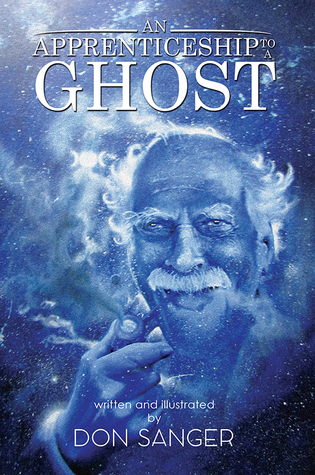
Review: Apprenticeship to a Ghost

Review: Apprenticeship to a Ghost


by Don Sanger

Today I'm reviewing Apprenticeship to a Ghost by Don Sanger. The author was kind enough to send me a copy a while back.

The book features many out-of-body experiences, which makes for a great backdrop. Like all books, there's both good and bad. I always like to start with the bad first so I end on a positive note.

The spelling, grammar and writing were actually very good (except for a few out-of-place commas) and the writing is mature, but the book needed serious proofreading. There are several instances where the wrong word is used, probably due to a lack of proof-readers and a spell-checker that was done in haste. So "might have had" appears as "might have hand." A "pint of lager" is presented as a "pint of larger." And "I was rather hoping" is now "I was rather hopping." Which makes for some interesting visualizations! "Exercise" becomes "Excise." "Morale" becomes "Moral." Even "astral plane" is given as "astral plain" in a couple places.

There were lots of these, and I know how it happens: when authors spend a lot of time editing a book, they get "too close" to the work and stop seeing mistakes that are glaringly obvious to everyone else. I'm as guilty of this as Sanger with every book I've ever written. Even my latest book has several mistakes like this. Authors are human and we make mistakes. Maybe I'm just more sensitive to it than most.

This book is visionary fiction (VF), and I tend to not like that genre in general. Oh, sure, there are a few outstanding VF books. Richard Bach's book Illusions is probably my favorite, and worth every penny, but Jonathan Livingston Seagull? Meh. Thea Alexander's 2150AD was also good. The problem I have with VF books is that there's often no plot, no conflict, and no tension. It's all about the message, not the story. That's what drove me nuts about James Redfield's Celestine Prophecy books: I'm just not a fiction lover, and when I take the time to read a novel, I want heart-pounding, blood-pumping, page-turning, nonstop, action-packed drama. Think Stephen King's Rose Madder or Firestarter. (One of my favorite OBE-oriented novels is The House Between the Worlds by Marion Zimmer Bradley, but it's not VF and it has no underlying spiritual messages. But I digress.)

In Apprenticeship to a Ghost Sanger tries to wrap the inspirational messages around some tension but it was not enough to enthrall me. There just wasn't enough conflict in the story.

There were several lead-ins where Sanger could have blasted the conflict, but didn't. For example, he could have made the out-of-body experiences themselves more tense and fearful (at first), playing on the apprehension of the main character, Don, but he didn't. I guess I can't blame him for not wanting to paint OBEs with a canvas of fear because OBEs are usually not like that.

He could have made the encounters with the ghost more scary and tense (at first). He could have made Don's relationship with his girlfriend, Sharon, more strained with bickering, fighting and threats. His family could have accused him of losing his mind, and threatened to have him committed. He could have heard scary noises, gotten dark alley beatings, and acquired stalkers. His grades could have suffered and his future jeopardized. He could have lost his job. He could have questioned his sanity. But nope. There was not enough tension. It didn't "grab" me with in-your-face "story" I wanted.

Still, I read the whole thing and I did enjoy it. The last third of the book was actually much better than the first two thirds. Sanger's descriptions were rich and colorful, and his musings were deep. You just need to go into it with certain expectations.

Plot or not, a good VF book should inspire you and make you see things in a brand new light. It should open your mind to new ideas and new possibilities. It should be mind-expanding. Apprenticeship to a Ghost does do all that. Much of the book takes the form of inner dialog, where Don is thinking to himself, and he thinks deep philosophical thoughts, and interesting thoughts: Thoughts about God, about communication with the spirit world, about reincarnation of animals and people, planes of existence, vibrations, spirits, over-souls and about the hierarchy of souls. Lots of deep thoughts, and I liked that.

The book has a feeling of honesty and authenticity, and I often paused reading to ponder whether Don Sanger went through some of the things his main character does. It helps that the main character's name is Don.

One of my favorite quotes of the book is:
"Ignorance is the root of all evil." (pg. 150)
Agreed! Another great quote is:
"We are beings living in different worlds. We are living on the same planet of course but living in different worlds." (pg. 233)
I was pleasantly surprised about two thirds of the way into the book when "Don" is taught a valuable energy technique: You hold your hands in front of you and repeatedly push and pull a "chi ball" or "energy ball" between your hands.

For many years I've actually done this exercise in bed while preparing for sleep. Not every night, but many nights. Here's my version: Lying face up, I lift my arms in front of me and push and pull on an imaginary chi ball between my hands. I actually hold my hands so all fingers point at each other, and try to manipulate the energy in the space between them. (This is a variation of an exercise I used to do many years ago in Tai Chi class while standing up). I also circulate the energy around my arms from left to right arm and across my shoulder blades. Then I imagine the energy accelerating. After maybe 30 seconds of this, I put my hands down, roll over to my side and go to sleep. That's what I do.

So imagine my surprise to find a similar technique in this book! In Sanger's version, the hands are held up like in prayer, and the space between them is pushed and pulled. It's a very similar technique, and I was quite surprised to find it here.

I also found another valuable technique in this book that I use regularly. In this one, you try to create an ever-expanding bubble of love that starts out small and grows to encompass the entire universe. I actually gave the details of this in my previous blog article, Raising Your Vibrations before I saw it in this book. The book also stresses the need for developing positive energy, as I did in that article. Funny how the pieces of the puzzle always fit together so nicely!

I resonated with the main character, Don who, like me, is changed because of his experiences. For example, develops a distaste for horror movies, similar to me.

The book is 249 pages with a smallish font and narrow margins, which means there's plenty of content. You'll get your money's worth.

I'll give it 3 stars out of 5.

Bob Peterson
04 February 2020
---------------------------

If you want me to review a book about out-of-body experiences or astral projection, send me an email: bob@robertpeterson.org, but please check the index first to see if I've already reviewed it. Also, I've got a huge pile of books I'm planning to review, so don't expect a quick turnaround.

If you like my work, visit my website, robertpeterson.org, where you'll find lots of other free OBE/AP advice and links.

Return to the index of my OBE Book reviews